Everyone Knows Your Mother is a Witch
#1 Rivka Galchen on the power of governing bodies and the life of Katharina Kepler

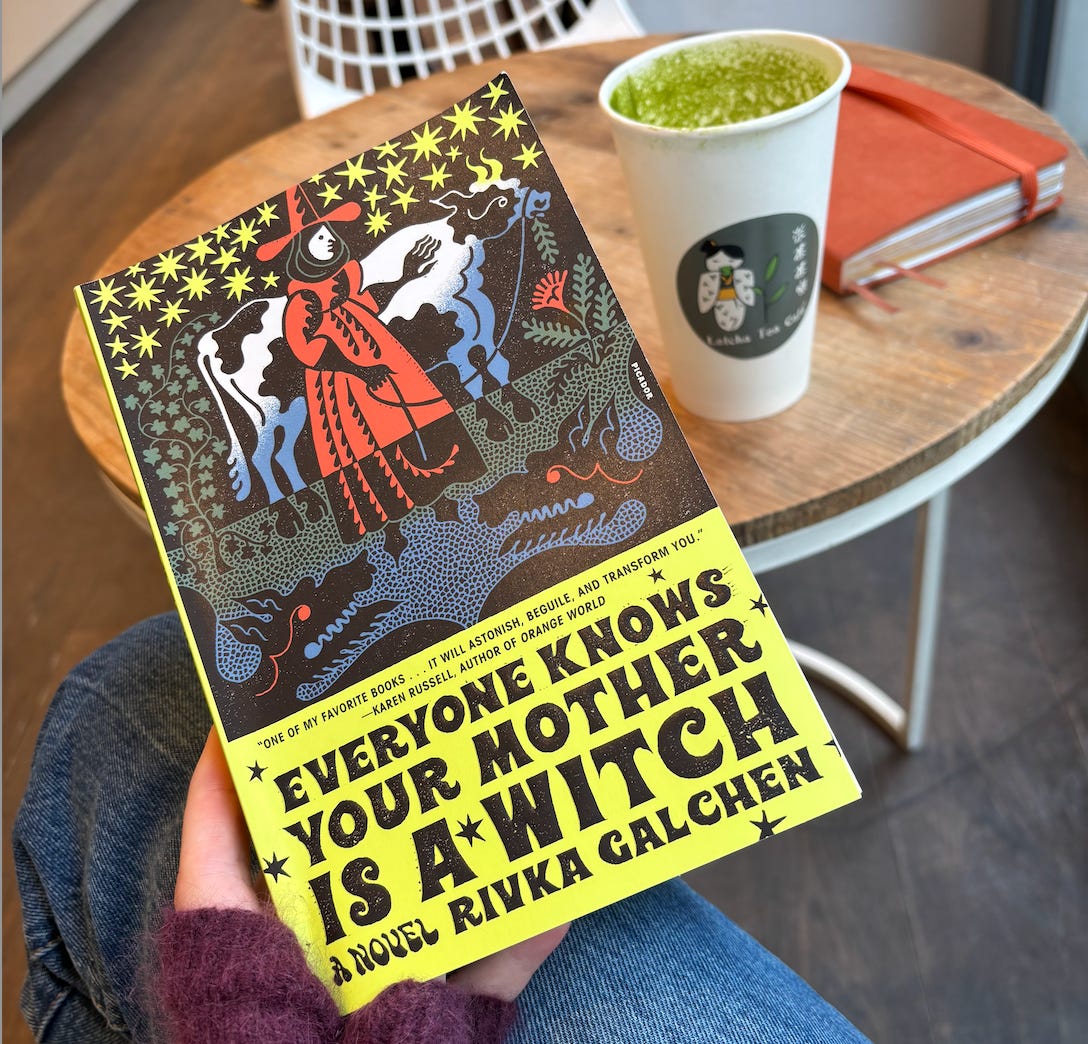
If I were a dragon, I might also feel relaxed. If I had talons, the ability to breathe fire. If I no longer existed. Those would be relaxing qualities—Rivka Galchen, Everyone Knows Your Mother is a Witch
Like most modern, loud, literary women, I have always assumed that, had I been born in a different time, I would have been tried as a witch. It feels right that I would have irritated someone enough to have my name added to the list of suspicious women communing with the devil. I think a lot of us share that belief. We imagine a witch trial from the perspective of the victim, looking down on the crowd from the gallows. But recently, I have wondered if I would have been cast in another role. Perhaps the daughter of the carpenter that built the gallows, or the scribe recording the trials. Maybe I would have been a nun praying for the lost souls or gossip relating the details of the hangings from a scandal sheet. Or maybe, just maybe, I would have been an accuser. In Rivka Galchen’s book Everyone Knows Your Mother is a Witch, the reader is asked to step inside all these roles. Everyone Knows Your Mother is a Witch is a fictionalised version of the life and witch trial of Katharina Kepler (1547-1622). Katharina was the mother of the astronomer and mathematician Johannes Kepler. Kepler is famed for his laws of planetary motion among other advances in the natural sciences. Most of what is known about Katharina is found in trial records and others' letters concerning her as she was illiterate. The novel is hyper aware of its epistolary form and constantly references its many scribes to remind readers of the many hands on the pen.
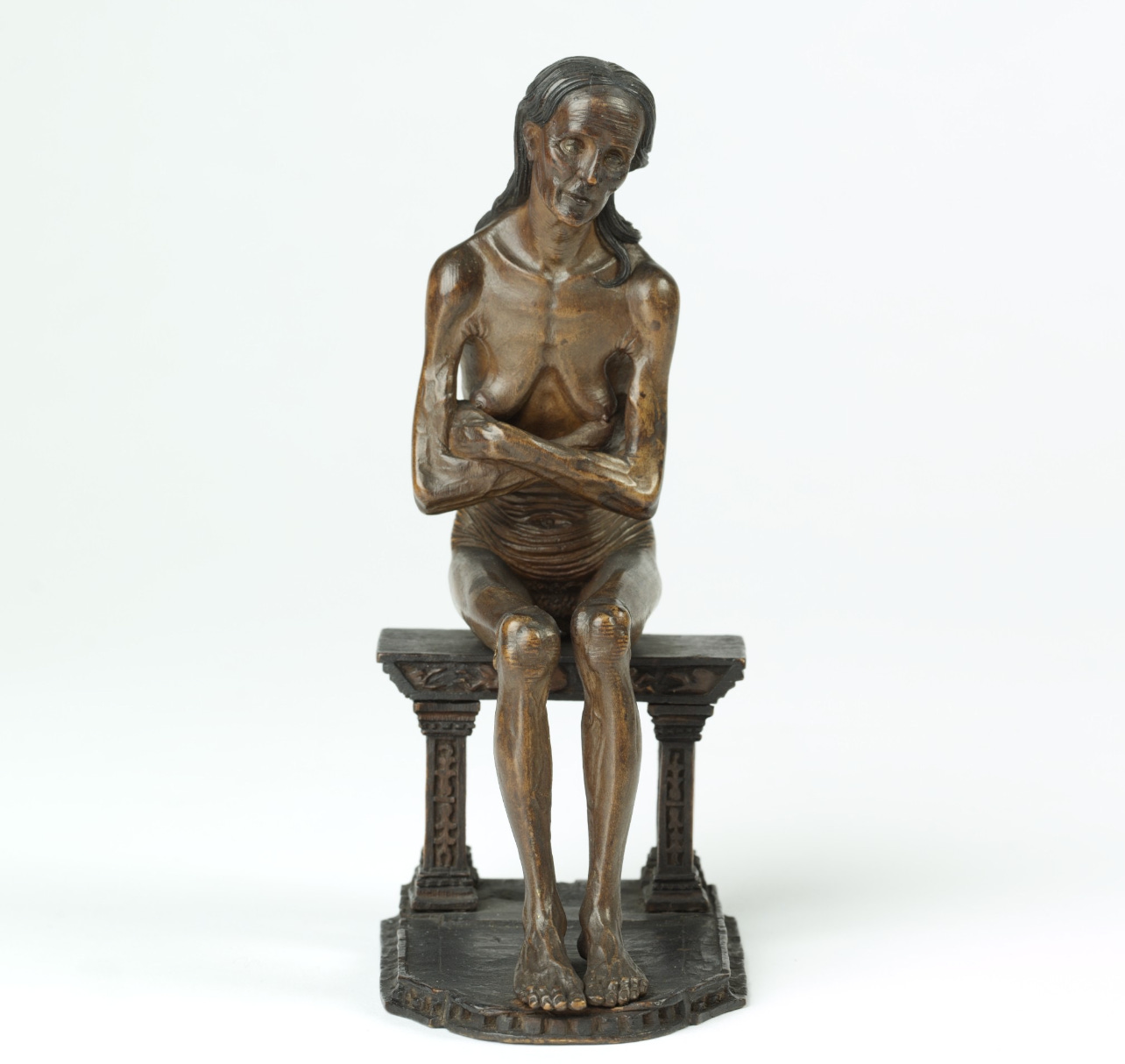
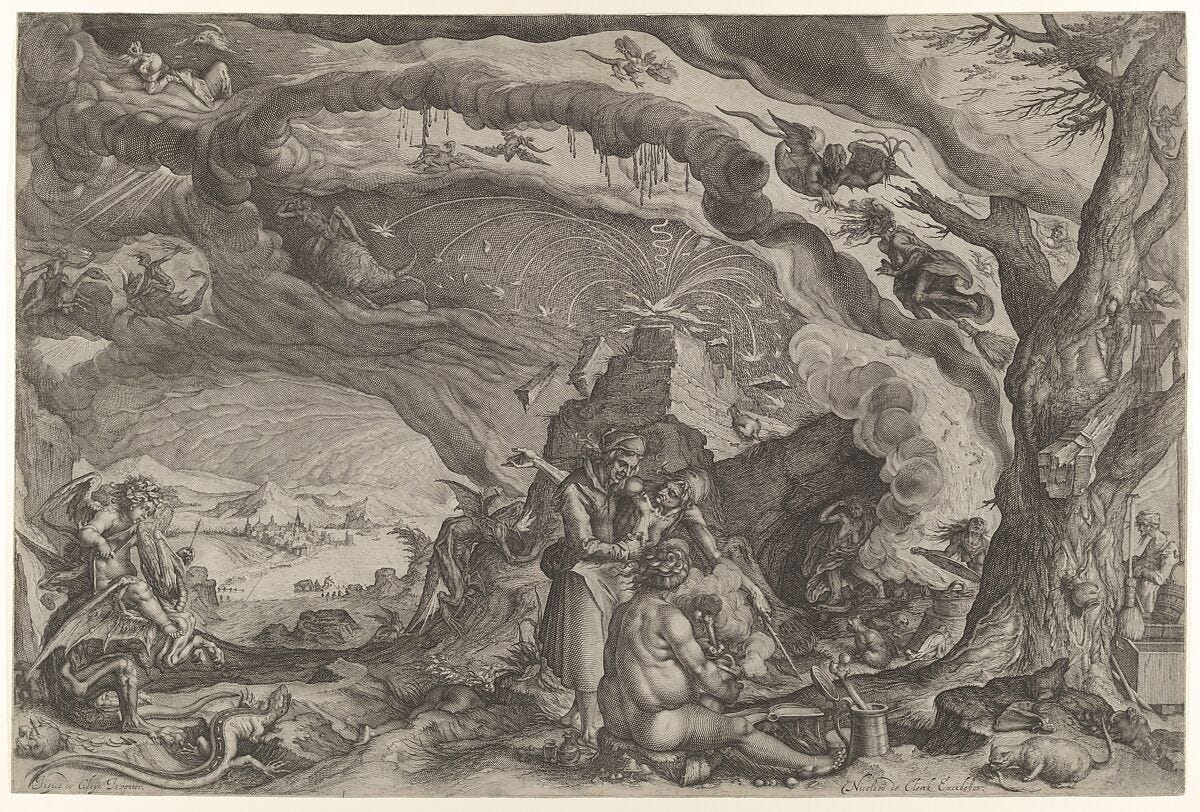
Matriarchs have always played an important role in human development. Since Hawakl’s 1978 “Grandmother Hypothesis”, anthropologists and social historians have been theorising about the importance of grandmothers and older adults in human development. It has been suggested that sharing histories, caring for dependents, and community organising by older adults are major contributors to the evolution of human societies. But in the time of Katharina’s trial, these positive attributes were not recognised. Older women, particularly those who possessed knowledge of medicine or the local environment such as she did, challenged “medical experts” and church doctrine and were painted as pathetic figures of ridicule. In her lecture on Katharina Kepler's trial, Prof Ulinka Rublack notes the change in the depiction of older women from the 1520s in the “Old Woman” Statue, to the 1610s in Jacques de Ghyn II’s “Witches Preparing for Sabbath” (see bellow). The figure of the old woman was turned from one of gentle wisdom to an ignorant, hungry animal. Initially, Pastor Blinder tells Katharina, “Witches aren’t even real… Now, some old women do believe that they have powers. Yes, they do. But they are to be pitied, not punished,” (101). This ideology sends a clear message, the worst (and perhaps most dangerous) thing you can do as a woman is to imagine yourself as powerful.
Galchen’s Katharina has no grand ideas of magic or dreams of influence; she is a sensible rural woman from Lenonburg whose principal concerns are her family and her cow Camomile—both of whom she seems equally proud. Katharina refers to many cows throughout the text as strong symbols of motherhood but also as references to her wealth of knowledge concerning foraging and animal husbandry. Beginning on the first page with Mare, the cow at her father's inn, Katharina tells readers through Simon’s transcription:
“She was cross and bitter toward me. I didn’t know why. I wouldn’t hesitate to put a blue silk ribbon on her neck if she were here today. She died from milk fever, which was no doing of mine, though as a child, I felt it was my doing, because Mare had kicked me and I had then called her fat-kidneyed.” (1)
Milk fever results from low blood calcium because calcium is being diverted to the colostrum used to feed the cow's calf. It is a mother’s disease. It is the result of having more taken from you than you can give. Mare, who feels the full force of motherhood, dislikes Katharina, and they both suffer. Katharina asks, “Was she my enemy?” and the answer is of course another question: who is the antagonist of this story? Who is to blame for the harm and lies the mother, the child, the man, or the childless woman? In my reading, there are two key contenders: Ursula Reinbold and The Ducal Governor Einhorn, whom Katharina prefers to call the False Unicorn (7) and therefore so will I. The False Unicorn is not a true leader, he merely borrows power and acts as the absent Duke. The False Unicorn maintains the momentum of Katharina’s persecution and facilitates the attack, representing the greed inherent in an inequitable system. Ursula is the more interesting of the two. She accuses Katharina of using “considerable dark powers” to make her “moan, weep, cringe, writhe, (and) be barren” (9). A list that is added to as the novel progresses and other townsfolk come forward to attach their hurt and misfortune to Katharina by means of magic and curses.
Ursula is presented as a woman unravelling, in a grease-stained blouse and hair unpinned she looks like a “comely werewolf” (11). She is childless, and it is said “that as a young woman Ursula took powerful herbs given to her by the apothecary—the apothecary with whom she had an affair before her first marriage,” (7) an account later confirmed by Hans (the fictionalised version of Johannes) through his research and interviews for the trial. Ursula displays signs of suffering from chronic pain potentially linked to an abortion or antifertility treatment which has prevented pregnancy but irrevocably damaged her health. She is in every way dysregulated. She is distraught, enraged, and almost entirely hopeless but for her dream of persecuting Katharina. As a woman with endometriosis, a reproductive condition that remains under-researched and underfunded, I feel for Ursula. I know the frustration of living in a body that is constantly in pain and out of balance. A body that never settles and always gets in the way. I know what it is to be misled and mis-medicated by doctors who cannot help. I also know what it is to not be believed. Ursula takes the pain, the tragedy of existing in a misunderstood body, and projects that suffering outwards onto Katharina, the woman with successful children and a healthy cow.
Women’s emotional, intellectual, and physical pain have been dismissed and trivialised throughout history—just as Katharina fears misinterpretation from the courts Ursula seeks a witness to her pain in the legal system. However, she seeks recognition in a system designed to dehumanise her and so in her bid for recognition, all she does is transfer the pain of being ignored and misrepresented to Katharina. Within that system, one woman’s suffering can only be recognized if it causes another’s. Ursula’s initial accusation invites others to attach all that is uncomfortable and bad and unlucky and insufficient in them onto Katharina . Her early accusations are of no more than daring to exist in the world as an older woman. Donatus Gültlinger supports Ursula’s claim at trial and when asked to explain begins:
“Frau Kepler often bought cheese from me at the market. She’s a talkative one. Not like some widows who you think have died themselves. You hardly see them anymore. Maybe they have someone who goes to market for them. Maybe they have no appetite. But not Katharina. No, no, no. She didn’t wither on the vine.” (206)
That was all it took for Katharina Kepler to be suspected of wrongdoing, a content older woman with an appetite and business to attend to. Social media has rung with sound bites of Jane Bell’s lyrics “crazy how the very first sin was a woman who ate,” an appropriate critique for Katharina living in the Lutheran heartland in 1615 that remains apt today. Katharina with her healthy cow Camomile, who is well fed and produces milk for her family without suffering the many illnesses of malnutrition, seems in opposition with the town suffering from many bad winters. She was not withering as she was supposed to in that time of famine and so she became a target.
It is in this malice I see some of the women I inherited endometriosis from. As a teenager, I visited an elderly relative and explained that I would cook for myself because I was following an anti-inflammatory diet to help my period pain and inflammatory symptoms. She stood by the laminex kitchen bench unnerved before informing me that she had always just “got on with it,” and that once when working in a shop she lost so much blood and was so dizzy with pain her boss had to take her home. He carried her to his car where she sat on her jacket to save his upholstery. For her, women’s suffering was only deemed notable when it was confirmed by a man. I believe Ursula feels the same need for male confirmation and so she turns to the False Unicorn. He is a man, and patriarchal representative, who has the power to record and recognise her pain through courts and scribes, the power to officiate and to notarise. There is power in notarisation for the othered, in having your pain witnessed and approved by the governing body.
Katharina Kepler’s story within Everyone Knows Your Mother is a Witch really has very little to do with witchcraft. Katharina is “of the rare opinion that there are no such things as witches at all” (145). It is a novel built on an economy of attention and notice. Ursula wants recognition for her suffering, Katharina wants to be allowed to live quietly and tend to Chamomile and it is the clash of these desires that propel the tale forward. As townsfolk see that by attaching their fear and suffering onto Katharina they can better hide from their incongruous selves, make money and lose debt they make her into a monster.
On entering the False Unicorn’s residence after being summoned to respond to the charges Katharina remarks of a stuffed pheasant with “green glass eyes. The pheasant looked evil. Turned evil, I will say, as opposed to born of evil,” (7). When she returns to the Ducal governor’s home later in the novel she notes:
“Someone had given the pheasant a dusting. This improvement has drained the bird of its power. Like a moody and terrifying revenant who yet cannot survive the light of day. The pheasant no longer frightened me. The spirit inside it had died. I felt sorry for the small devil. What or who had killed the spirit. I asked myself. I answered myself, your fears are feeding the beasts, Kath-chen.” (112)
Katharina is not given the luxury of a safe option; she is forced to pick from the dangerous and deceitful, and yet she maintains that evil is not definite it is a choice and a process.
Throughout the text, Simon insists that monsters are always man-made, he writes:
“I try my best to like people. To expect good from them. If you see someone as a monster, it is as good as attaching a real horn to them and poking them with a hot metal poker. I really do think so. In order to avoid turning people into monsters by suspecting them of being monsters, I do my best to keep mostly to myself… a monk without a monastery, that was my hymn for many years. Even a monastery—too much of a crowd.” (38)
The notion of monster making is a complex one for me. I think it is clear that Katharina and any member of a persecuted or othered group are not responsible for their persecution. However, I think there is truth that when confronted with what is unlucky, cruel or lacking within ourselves we become so uncomfortable that we begin to attach all that is bad to something or someone outside of ourselves. It seems incongruous to us that we could be generous and petty, vicious, and loving. We find the people and situations that bring out both in us and attach any extreme we feel to them and expel them far from us. Katharina was an object of her community's externalised evil. Galchen does not give us our beloved view from the gallows when watching Katharina Kepler’s trial. Readers are not allowed to look down on the scene as a morally uncompromised victim nor can we run from the mess of human connection as Simon does; Galchen forces us into the letters and accounts of persecutors and bystanders. After all, everyone loves a witch hunt, and we can’t all be witches.
So good!
Loveeee thiisss!!!